
Curriculum Intent
The Computer Science curriculum here at Arena Academy is designed with the explicit intention of nurturing computational thinking, thereby endowing students with advanced proficiency in logical reasoning, algorithmic acumen, and the principles of abstraction.
Our mission is to craft individuals into digital experts, emphasizing the pivotal role of computer science education as the gateway to unlocking profound digital literacy. This educational program guides students not merely in navigation but in the mastery of the ever-evolving digital terrain, underscored by critical acumen and responsible expertise.
Beyond mere coding, our students are envisioned as ethical architects who play a vital role in shaping the future. The curriculum is strategically structured to instill a deep sense of responsibility, accentuating ethical computing practices, digital ethics, and a heightened consciousness regarding the societal implications of their digital creations. The curriculum is designed to prepare students not only with technical skills but also with a mindset that aligns with the demands of the contemporary world.
Our Teachers
- Mr Karra – Teacher of Computer Science
- Mrs Bains – Teacher of Computer Science / Head of Business
- Ms Ivanova – Teacher of Computer Science / Business
- Mr R Mann – Teacher of Computer Science, Headteacher
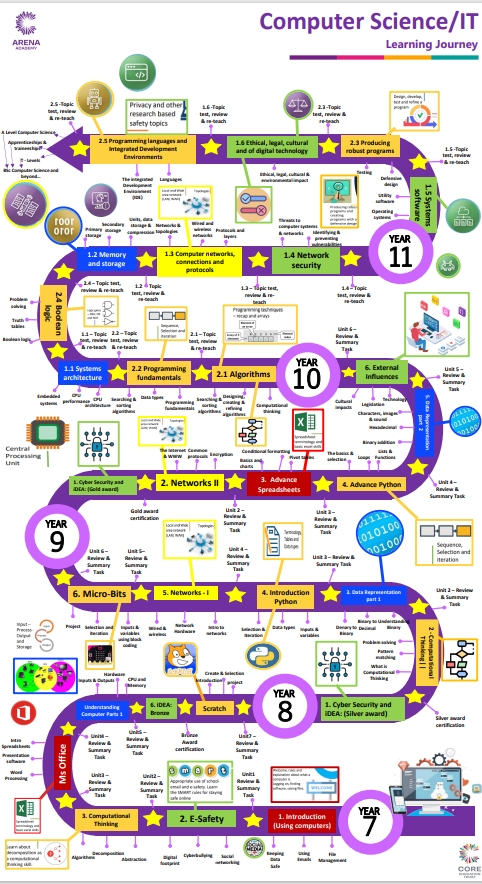
Learning Journey
Assessment and Exams
OCR GCSE Computer Science
Aspire 5
A grade 5 student should be able to:
- Demonstrating a good understanding of core concepts such as algorithms, programming, data structures, and computer systems
- Write clear and structured responses, using relevant terminology and correct notation.
- Show an understanding of ethical and legal considerations, especially in areas related to computer science, by addressing these topics in written responses.
- Solve problems effectively, which may involve writing pseudocode, flowcharts, and code snippets to demonstrate their problem solving skills.
- Demonstrate theoretical knowledge in computer science, including topics like hardware, software, networks, and cybersecurity. This can be done through written answers on exams.